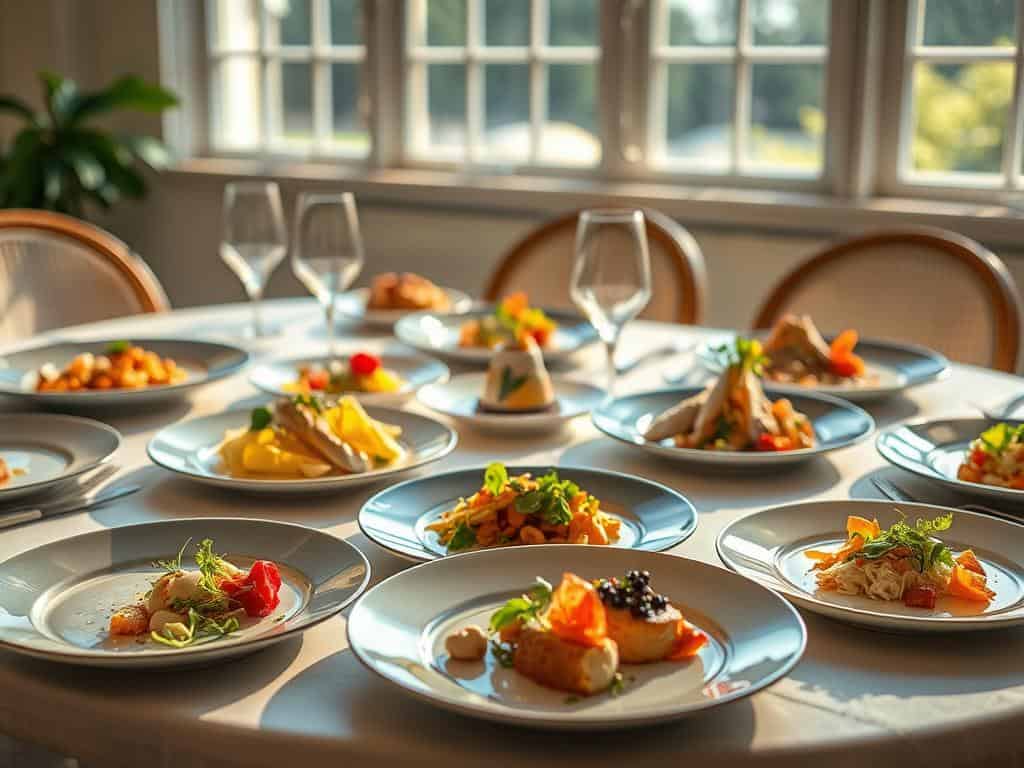
Did you know studies from Oxford show that great food presentation can make meals seem more valuable? This lets restaurants charge more. But it’s not just for them; home cooks can do it too. In our world full of pictures, stunning meals are everywhere online. They inspire us to make our cooking look and taste amazing.
Learning to plate food right can make eating even more fun. It can change the way we see our meals. With just a little know-how and creativity, I can make dishes that catch the eye, without being a chef. Let’s dive into some easy tips that can help anyone make their plates look professional.
Key Takeaways
- Food presentation tips can elevate the dining experience from everyday to extraordinary.
- Mastering plating techniques can improve the perceived value of my meals.
- Visual appeal influences the enjoyment of a meal more than I might think.
- There are specific strategies to create an elegant serving regardless of my skill level.
- Cleaning the edges of the plate is a simple yet effective finish to enhance presentation.
Understanding the Basics of Plating
Plating is about the art of food arrangement to boost its look. It’s not just skill—it’s knowing how to make a meal more than just food. A well-presented dish can make eating a real joy.
What is Plating?
Plating means arranging food so it looks good together. You place the main part, often meat, with sides and extras. It’s about making the plate not too full, using the rule of thirds for beauty.
Using odd numbers for garnishes makes the dish more appealing. This creates lines that catch your eye.
The Importance of Food Presentation
Food that looks good is seen as worth more. This lets restaurants charge more. For example, red plates make food more tempting, but blue ones don’t because blue food is rare.
A study found that dishes that look better seem to taste better, too. This shows how much presentation matters in enjoying food. In fancy dining, 90% of chefs think great plating makes a meal unforgettable. Knowing plating basics lets chefs make dishes that are a feast for the eyes.
Food Presentation Tips for Home Cooks
When I dive into the world of plating, I find out that making your food look good takes some skills. A dish that looks good is not just nice to look at. It makes eating it more fun too. I pay attention to choosing the best plate, making sure the portion size is just right, and using space smartly. I also think about how to make the colors and texture pop.
Choosing the Right Plate
Picking the right plate is super important for making your food look amazing. It’s key to choose plates that make your food stand out. Chefs often say to stay away from blue plates since blue foods are rare in nature. Instead, they suggest going for a plate that makes a strong contrast. This could mean using dark plates for bright dishes. And sometimes, a plate with a fun shape can make the meal even more exciting.
Consider Portion Sizes and Negative Space
How you present your food also depends on how much you put on the plate and how you use empty space. Chefs say to keep it to six items max to avoid it looking too crowded. This way, each part of your meal gets its chance to shine. And by using empty space wisely, you make your dish even more appealing. I like to use the rule of thirds, placing the main part of the meal off to one side to make the plate look more interesting.
Using Color and Texture to Enhance Visual Appeal
Colors and textures can really make a dish stand out. Using fresh, colorful ingredients like green asparagus or red strawberries makes the plate look lively. I try to mix different colors for more depth. And I think about texture too—adding something crunchy or creamy can make it more exciting. When it comes to tasting menus, chefs go for smaller portions so they can play with a rainbow of colors and surprise our taste buds with fun flavors.
Essential Tools for Professional-Looking Plating
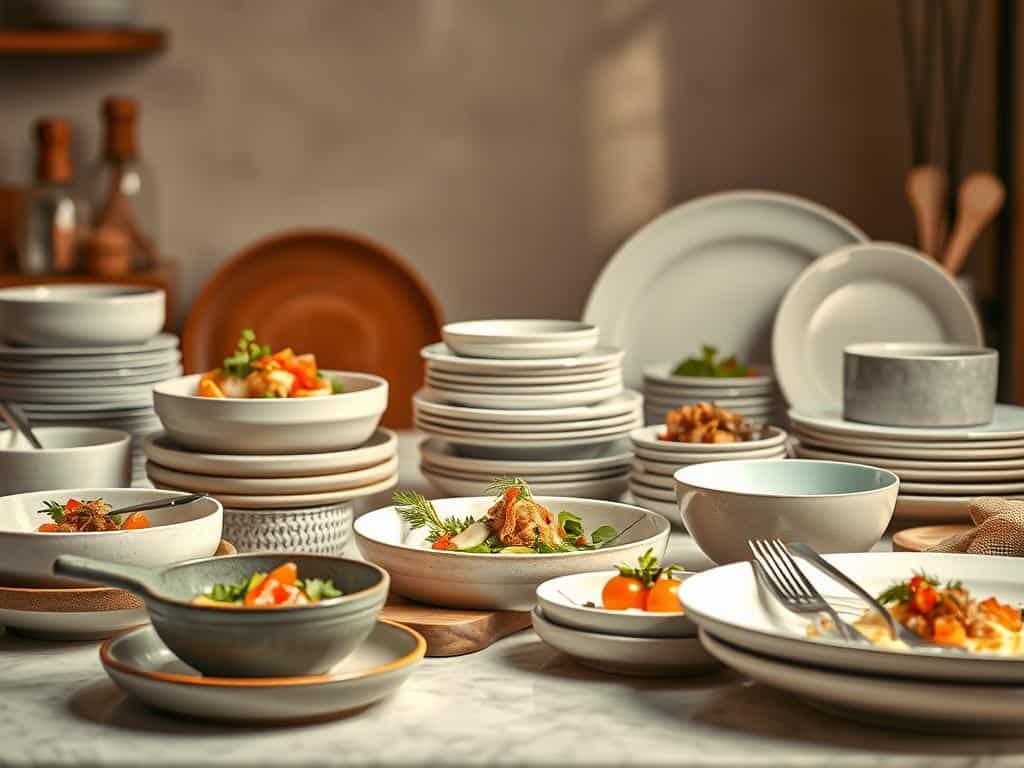
The right tools are key for amazing presentation in the kitchen. With essential kitchen and professional plating tools, I can make any dish look more inviting. Each tool is vital for that high-end dining look.
Must-Have Kitchen Tools for Plating
A good set of tools is a must. Spoons and small spatulas help me place and move things on the plate just right. Ring molds keep ingredients stacked neatly, and squeeze bottles are great for artistic sauce drizzles. For those perfect touches, I use tweezers to add delicate garnishes.
Optional Tools that Enhance Precision
If you want to get even better at plating, more tools can help. Professional tools boost the precision and look of my dishes. I use artist’s brushes for sauce and precision tongs for placing items without messing up their look. These tools not only make my plating better but also make meals memorable for my guests.
Conclusion
The path to beautiful serving starts with knowing the basics of showing off food. I talked about key ideas like choosing the right plate, keeping an eye on how much food you put on it, and using colors and textures to make dishes that catch the eye. These steps don’t just make the food look good. They make the whole meal better.
Using the best ways to plate food can really uplift how any dish is seen. Studies have found that a stunning showing can make people happier and even get them to post their food online. This gets more people excited about your food creations. Putting in the time to make your food presentation great turns normal meals into unforgettable eating moments worth sharing.
I urge you to try different tools and methods. Remember, good plating is more than looking good—it’s crucial to cooking. By using these tips, you’ll make dishes that taste as amazing as they look. This shows that a dish served well is key to a great eating experience.
