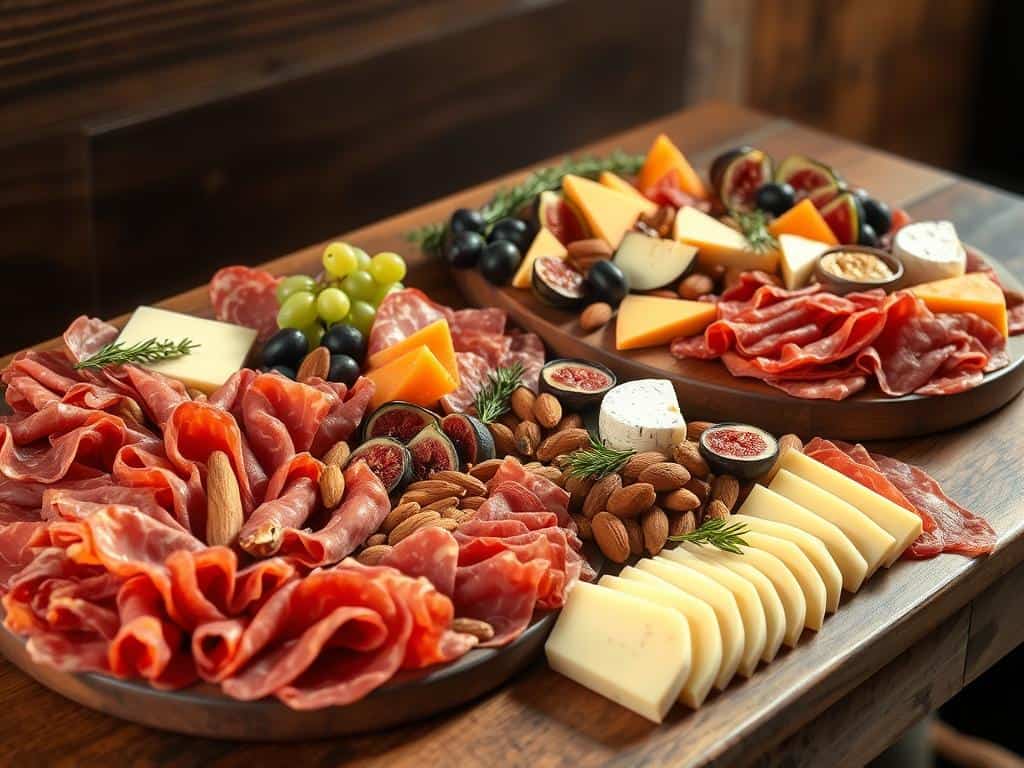
Did you know charcuterie boards range from 5 to 15 components? These include meats to cheeses, pleasing many tastes. They spark conversations at gatherings. As a food lover, I adore making stunning boards that become any gathering’s star.
Charcuterie boards bring out creativity and friendship. A well-arranged cheese platter turns any event special, offering diverse flavors and textures. I will share tips on making a board that wows your guests. You will learn to pick meats and cheeses and add beautiful spreads, lifting any event.
Let’s start with charcuterie board basics. We’ll see how simple and fun it is to create these elegant snacks. They draw everyone at the table in.
Key Takeaways
- Charcuterie boards typically include a variety of meats, cheeses, and other accompaniments.
- Using at least three types of cheese caters to different tastes and enhances texture variety.
- Incorporating colorful fruits and decorative elements can boost visual appeal.
- Serving recommended portion sizes ensures guests can enjoy a full spectrum of flavors.
- Charcuterie boards are an easy, no-cook solution for gathering snacks.
Understanding the Basics of Charcuterie Boards
A charcuterie board is like a painting made of meats, cheeses, and more. It’s a feast for your eyes and taste buds, crafted to make dining unforgettable. This tradition has grown, now starring at parties and special events.
What is a Charcuterie Board?
A charcuterie board is a mix of cured meats, cheeses, fruits, and extra goodies like spreads and nuts. Its beauty is in the variety it offers, catering to all kinds of tastes. With both traditional and new flavors, it’s a feast that welcomes everyone.
The Appeal of Charcuterie Boards in Gatherings
Charcuterie boards are perfect for get-togethers, as they bring people together. They are eye-catching with their bright colors and different textures. They make any event feel more welcoming, inviting guests to try various delicious pairings.
Key Components to Include
Building an exceptional charcuterie board means knowing what to include. Start with 3-5 types of cured meats like prosciutto, salami, and chorizo. This mix ensures a range of tastes and textures.
The choice of cheese is just as crucial, offering four varieties at least, such as brie and cheddar, encourages great pairings. Add fruits like grapes and berries, and don’t forget nuts and crunchy bits for balance. With 2-3 spreads, like jam or mustard, your charcuterie board rises to new heights.
How to make a charcuterie board: Step-by-Step Guide
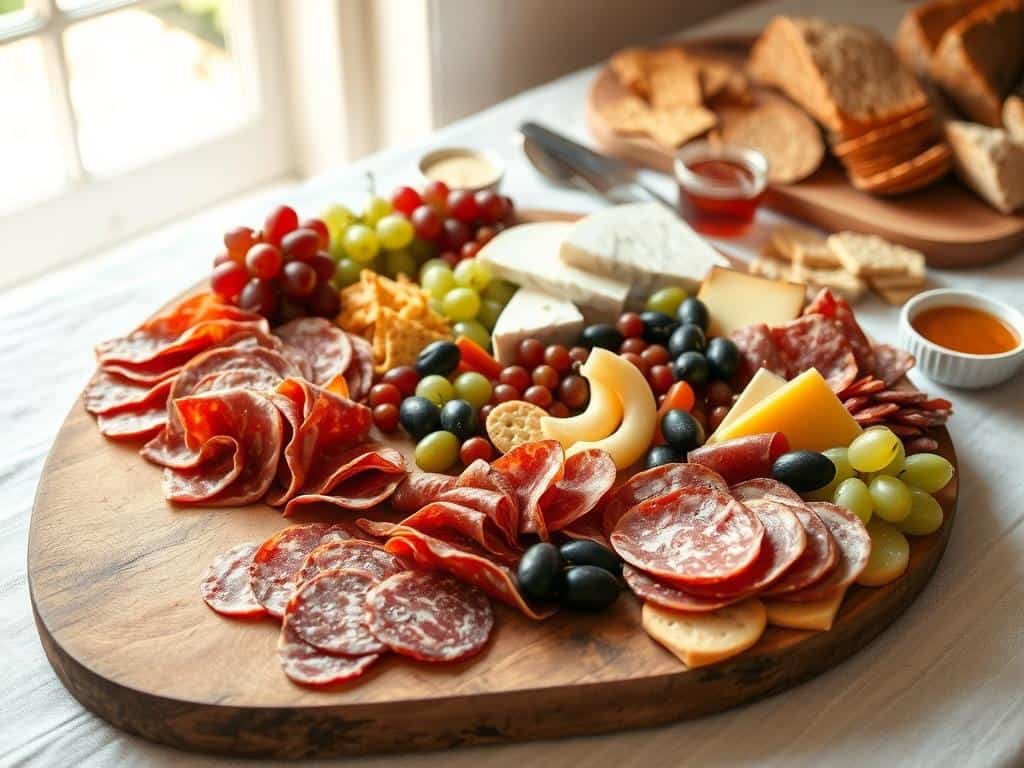
Creating the perfect charcuterie board is all about mixing flavors and textures. The steps to make a charcuterie board start with picking out meats. You’ll want to choose a variety, like salami, prosciutto, and pepperoni, having at least 4 kinds for the best taste and look. Aim for 2-3 ounces of meat per person. This lets everyone try multiple kinds without getting too full.
When it comes to selecting cheeses for charcuterie, variety is key. You should choose at least four kinds: soft brie, sharp blue cheese, firm aged cheddar, and spicy pepper jack. These choices add different flavors and make the board look tempting. Adding tasty spreads, like honey or fig preserves, can make the cheeses even better.
Then, I think about the crackers and breads for charcuterie, which are the base of the board. I go for different textures, such as crunchy, herbed crackers and soft baguette slices. Include at least three types, and think about people who eat gluten-free. To make the board complete, add fresh fruits like grapes, figs, and apples, along with veggies and some olives. These add fresh tastes and pops of color, plus they bring in a nice crunch.
