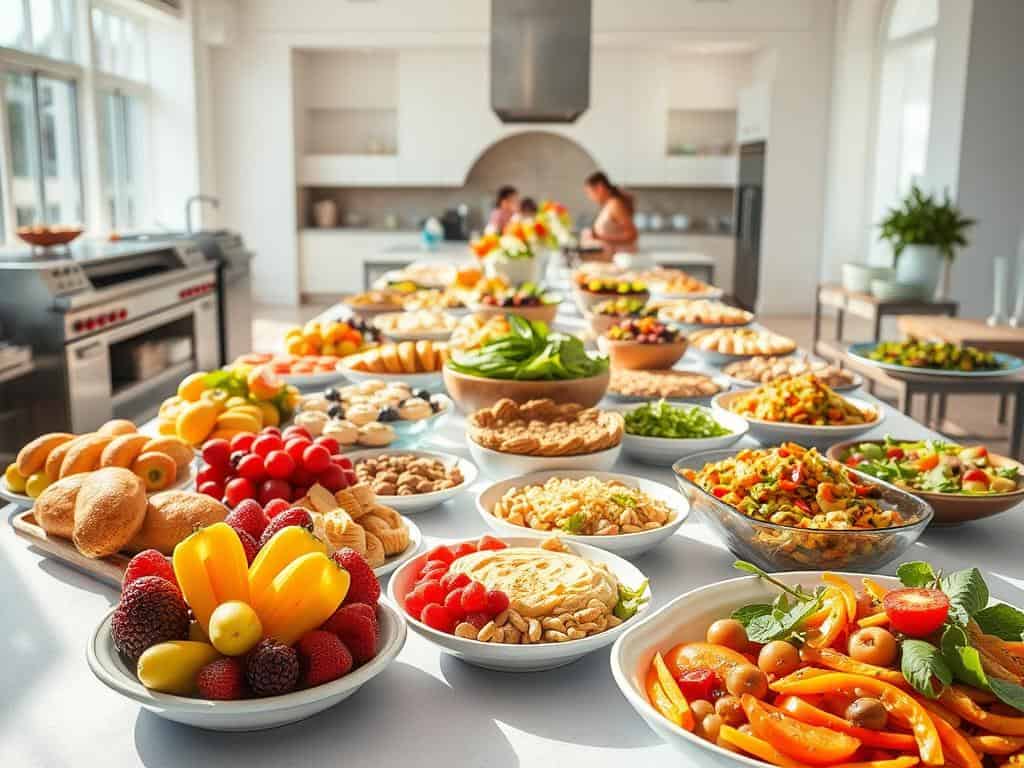
Staggeringly, about 32 million Americans live with food allergies. This means event planners must focus more on allergy-friendly catering. As a host, my goal is to make meals everyone can enjoy safely, without worrying about allergic reactions. Understanding how to serve food to people with dietary restrictions is key, especially at big events like weddings or work gatherings. By talking clearly and being aware, I can make sure everyone has a great time at the table.
Focusing on allergy-friendly catering can make guests happier and feel more included. Learning about this and avoiding misunderstandings makes sure that everyone goes home feeling good and safe.
Key Takeaways
- Understanding the widespread impact of food allergies is vital for effective meal planning.
- Clear communication with guests about their dietary needs helps avoid potential allergic reactions.
- Offering diverse and inclusive meals is beneficial for guest satisfaction and return visits.
- Labeling menu items clearly can empower guests to make informed choices.
- Creating a proactive allergy plan significantly enhances event safety.
Understanding Food Allergies
Knowing about food allergies makes eating more fun for everyone. People face allergies that greatly affect their day-to-day life. It’s key to know about common food allergens when making food. By thinking of these allergens, we ensure guest safety and make everyone feel included.
Common Allergens to Consider
Important allergens include milk, eggs, peanuts, tree nuts, soy, wheat, fish, shellfish, and sesame. These can cause serious allergic reactions. By understanding these, we can make sure everyone’s safe and cater to their needs. Working with caterers to skip risky ingredients helps lower the risk of reactions.
Impact on Guests with Allergies
Eating out can make guests with allergies nervous. They might worry about coming into contact with allergens, which can spoil the fun. This shows why it’s crucial for hosts to talk openly with guests. By considering dietary needs and planning well, hosts build a space of trust.
Talking with guests helps provide better service, making a friendlier space. Guests should feel comfortable sharing their allergy info, so caterers can take good care of them.
Allergy-Friendly Catering: Best Practices for Event Planners
To make guests with food allergies feel welcome, start by talking to them. Asking guests about their allergies early on builds trust. Also, adding a section for allergies on the RSVP form makes things easier. This way, the food for the event can be made to fit everyone’s needs.
Effective Communication with Guests
It’s important to talk to guests early, about three weeks before the event. This gives enough time to meet any special food needs they have. Keeping the communication clear and open makes guests feel cared for and safe.
Labeling and Menu Options
It’s key to make clear menus that show the major allergens. I also add any other allergens that guests tell me about. This helps everyone avoid foods they’re allergic to and makes the meal better for all.
Preventing Cross-Contamination
Stopping cross-contamination is critical for guest safety. Teaching staff about food allergies and how to avoid mixing foods is a must. Having separate areas and tools for allergen-free meals keeps the kitchen safe. Also, knowing what to do if someone has an allergic reaction is important.
Proactive Planning for Special Events
When you’re setting up an event, being ahead of things like food allergies is key. You must make a detailed plan for allergies. This should cover all the food allergens and note everyone’s dietary limits and choices.
Creating a Comprehensive Allergy Plan
It’s super helpful to ask about diet needs when guests sign up. This helps spot who needs special food, like gluten-free or nut-free dishes. With around 15 million Americans dealing with food allergies, it’s important to consider everyone’s needs.
Working with Caterers for Safe Meals
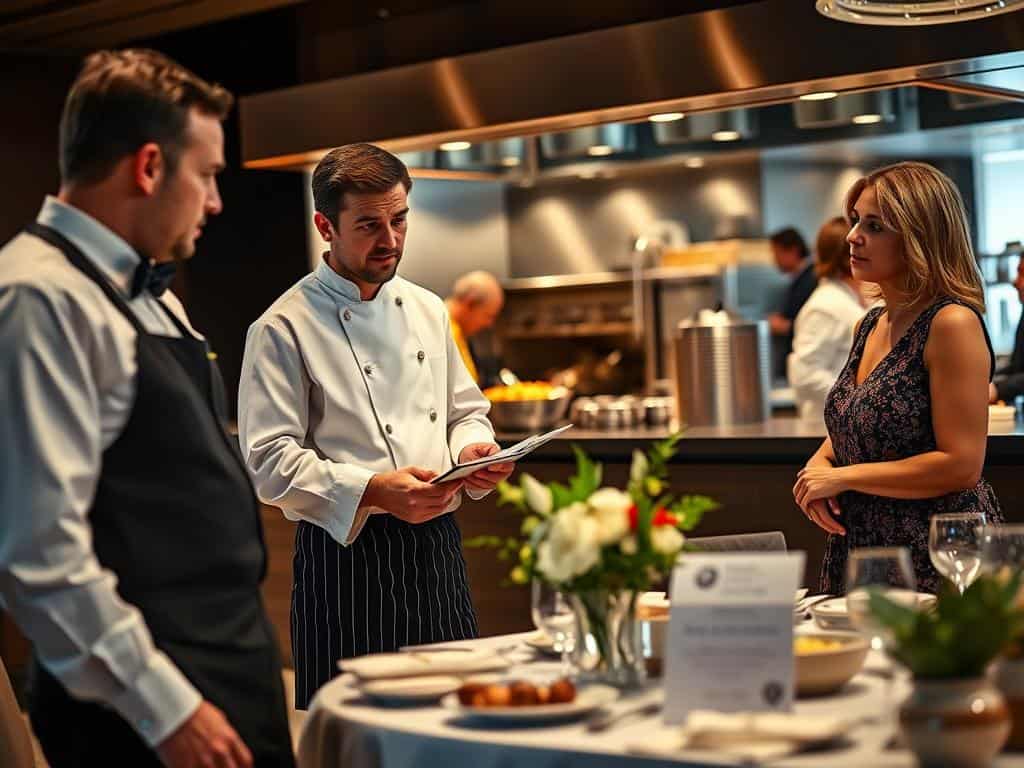
It’s really important to work closely with caterers to avoid any food issues. Getting caterers on board early helps them know about any allergies. This means they can use safe practices to avoid food cross-contamination.
Discussing cooking and serving practices with caterers ensures they follow your allergy plan. This includes things like using separate cooking tools and color-coded utensils.
Conclusion
Making catering safe for everyone is key to making guests feel valued at social events. As I plan events, I see how important it is to know about allergies. It’s crucial to understand allergies like peanuts, tree nuts, dairy, and shellfish to make catering more welcoming.
By dealing with dietary needs early, I can make meals safe with caterers. We focus on avoiding cross-contamination and keeping communication clear. This approach makes guests comfortable and welcomes those with food allergies.
My main aim is to make eating at events safe and fun for everyone. With careful planning and understanding, we can host events with catering that includes everyone. This way, everyone can enjoy the meal together, without worrying about allergies.
