Did you know that olive oil’s smoke point can vary from 160-240°C (375-465°F)? This depends on how refined it is. This highlights the importance of the many cooking oil types we can use today. In kitchens full of choices, picking the right cooking oils is key. They make our food tasty and help us eat healthily. Cooking oils are crucial in our meals. They affect everything from flavor to our well-being.
When looking into the best cooking oils for different meals, knowing the types of fats they have is important. This knowledge affects our health over time. From heart-healthy avocados to versatile canola oil, there are many healthy fats to choose from. This guide aims to shed light on the different cooking oil options. And it helps you make smart choices in the kitchen. So, let’s learn more about these essential fats for a healthier kitchen!
Key Takeaways
- Olive oil is versatile and has varying smoke points depending on refinement.
- Choosing the best cooking oils impacts both flavor and health.
- Understanding healthy fats is key to a well-balanced diet.
- Diverse cooking oil varieties offer unique nutritional benefits.
- Making informed decisions about oils is essential for healthy cooking.
Understanding the Importance of Cooking Oils
Cooking oils are key in a healthy diet, offering good fats. Good fats support our cells, brain, and hormones. Knowing their benefits helps us choose what to eat.
The Role of Fats in a Healthy Diet
Fats are important but should be eaten in moderation. They have more calories compared to carbs or proteins. It’s suggested that fats should be 25% to 35% of our daily calories.
Healthy fats help our body use vitamins A, D, and E. Good fats are vital in preventing diseases and maintaining health. We should avoid trans fats from processed foods because they increase bad cholesterol and heart disease risk.
Types of Fatty Acids
There are three main fats: saturated, monounsaturated, and polyunsaturated. Saturated fats are in butter, whole milk, and fatty meats and should be limited. Meanwhile, monounsaturated fats, found in items like olives, avocados, and nuts, lower bad cholesterol and raise good cholesterol.
Polyunsaturated fats, which consist of omega-6 and omega-3, are in oily fish, walnuts, and flaxseeds. Adding these healthy fats to your diet boosts health and well-being.
Best Cooking Oils: Evaluating Your Options
Choosing the right cooking oil is key for your health. There are many oils out there, and picking the right one helps with better nutrition and wellness. It’s important to go for heart-healthy oils for both taste and health benefits.
Heart-Healthy Choices
Extra-virgin olive oil is great because it’s full of good fats, vitamin E, and antioxidants. Studies show it can reduce heart disease risk and help with blood pressure and cholesterol. Avocado oil is also good, with a high smoke point and lots of healthy fats. It may even help lower bad cholesterol.
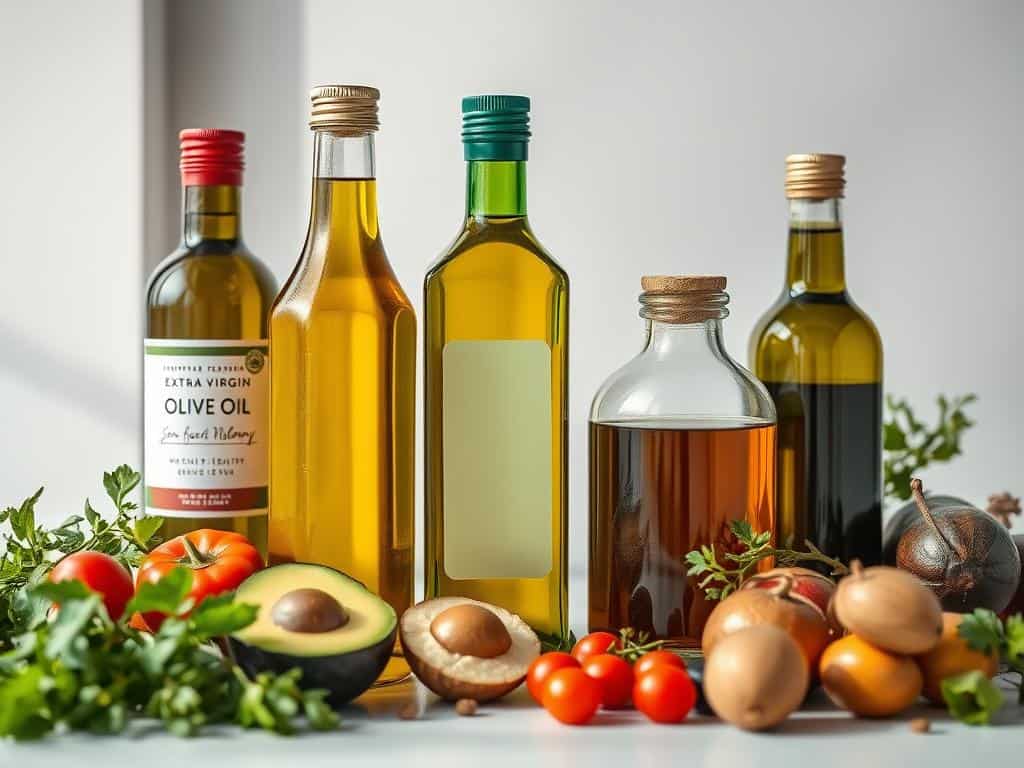
Walnut oil is another good choice, rich in an omega-3 fat called ALA which fights inflammation. Safflower oil, loaded with linoleic acid, is good for your heart too. I make sure to use these oils in salads and dishes for heart health.
Avoiding Unhealthy Oils
On the other hand, some oils hurt your health. Oils rich in trans fats and omega-6, like soybean and corn oil, can cause inflammation and disease. I avoid cooking sprays because of the harmful chemicals. And, I use oils high in saturated fats, like palm oil, sparingly.
Making smart choices with cooking oils is crucial. By choosing heart-healthy oils and avoiding bad ones, I help myself live healthier.
Cooking Oil Comparisons: Smoke Points and Uses
It’s important to know about smoke points when picking cooking oils, especially for high-heat dishes. Each oil has a smoke point, a temperature where it starts to break down and release bad compounds. I use cooking oil comparisons to choose the best oil for the cooking method I’m using.
High Heat Options
Avocado oil is great for high heat cooking, with a smoke point of 520°F. It’s perfect for frying and sautéing. Refined peanut oil and vegetable oil are also good, with smoke points of 450°F. They handle intense heat well.
Canola and grapeseed oil are also good for high heat cooking. They offer both versatility and flavor.
Best Oils for Dressings and Low-Heat Cooking
Choosing the right oil can really improve dressings and low-heat dishes. Extra virgin olive oil, with a smoke point between 375°F and 400°F, is great for salads or light sautéing. Flaxseed oil is another good choice for smoothies, despite its lower smoke point of 225°F. In cooking oil comparisons, these oils make food tastier and are healthier without causing oxidation.
Conclusion
Understanding cooking oils is key for your health and the taste of your food. Healthier options like extra virgin olive oil and avocado oil boost meal flavors and heart health. Olive oil, especially, lowers the risk of heart disease, making it a top choice for me.
The smoke point is vital to know when cooking with oils, especially at high temperatures. Canola and rice bran oils are great for frying because they can handle the heat. Meanwhile, olive oil is perfect for dressings and cooking on low heat. It’s also important to watch how much saturated fat you eat daily.
Using these tips has changed how I think about the oils in my food. Knowing what each oil does best lets me cook healthier, tastier meals. This way, I take care of my health and enjoy my food to the fullest.
