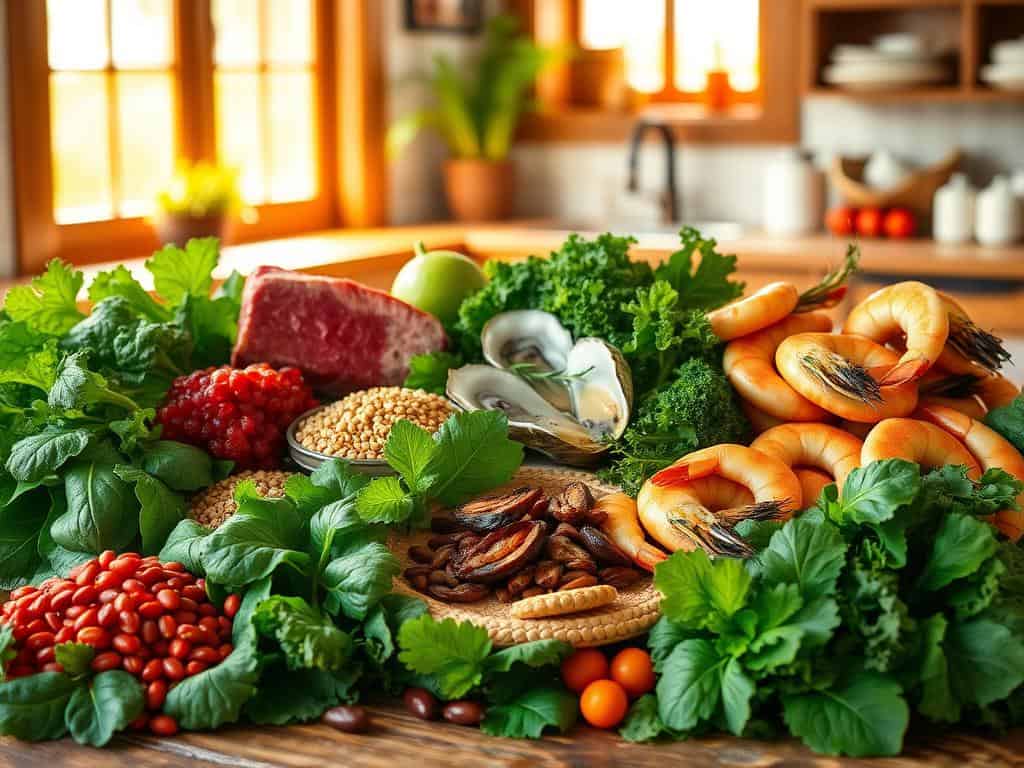
About 30% of people under 50 who menstruate are anemic, mainly from not getting enough iron. This is a big issue since iron deficiency is common. It can cause tiredness and low energy. In my experience, I’ve felt my energy drop and wondered if my diet lacked iron. Iron is key for making hemoglobin—this protein carries oxygen in our blood. So, keeping up our iron intake is crucial for our energy and health. When we don’t get enough iron, it affects our wellbeing. It’s important to find tasty foods that are rich in iron to improve our diet.
Key Takeaways
- Approximately 30% of people under 50, especially women, are at risk of iron deficiency anemia.
- Iron is crucial for the formation of hemoglobin in red blood cells.
- Women aged 18 to 50 need 18 milligrams of iron per day.
- Including iron-rich foods in your diet can help combat feelings of fatigue.
- Vitamin C can enhance iron absorption when consumed together.
- Pregnant individuals have a higher iron requirement of 27 milligrams daily.
- Many delicious foods are available to boost your iron intake and energy levels.
Understanding Iron and Its Importance
Iron is key to staying healthy. It helps with many body functions. Since we can’t make it, we need to eat foods rich in iron. This is why iron is so important in what we eat every day.
What is Iron?
Iron is a mineral found in two forms: haem and non-haem. Haem iron is from animal foods like red meat and is easily used by our bodies. Non-haem iron comes from plants, like lentils and spinach. It’s mainly in vegetarian diets. We need to eat more non-haem iron to get what our bodies need.
Why Do We Need Iron?
Iron is vital for creating hemoglobin. Hemoglobin carries oxygen in our blood. Not having enough iron can make us feel tired, give us headaches, and make it hard to focus. Not enough iron can lead to anemia, the most common type of anemia.
Pregnant women need different amounts of iron than kids. For example, pregnant women need 27mg/day. Young children need between 9mg to 11mg/day. It’s important for everyone to get enough iron, but even more so for pregnant women and teenagers. Not getting enough iron can affect your energy and how well you think and feel.
The Best Iron-Rich Foods
Eating different foods high in iron is key for great health. There are two types of iron in our diet: heme and non-heme. Heme iron comes mostly from animal foods and our bodies absorb it well. Non-heme iron is in plants but isn’t absorbed as easily. This part talks about the top foods rich in iron to help boost my levels and fight tiredness.
Haem Iron Sources
For heme iron, red meat is a top pick. A 3.5-ounce piece of beef liver has 6.5 mg of iron. This is 36% of what you need each day. Birds like chicken and turkey also have a good amount of iron. Seafood, including clams and shrimp, are great too. For example, clams have around 3 mg of iron, or 17% of your daily need. Eating these foods often can really up the iron in your body.
Non-Haem Iron Sources
Non-haem iron foods are key too, especially if you don’t eat much meat. Spinach, legumes, lentils, and cereals with added iron are good choices. One cup of cooked lentils has 6.6 mg of iron, which is 37% of the daily value. Since our bodies don’t take in non-haem iron as well, we may need to eat more of these foods. Eating them with foods high in vitamin C, like oranges and broccoli, helps absorb more iron. Mixing heme and non-heme iron foods lets me get enough iron and avoid iron deficiency.
