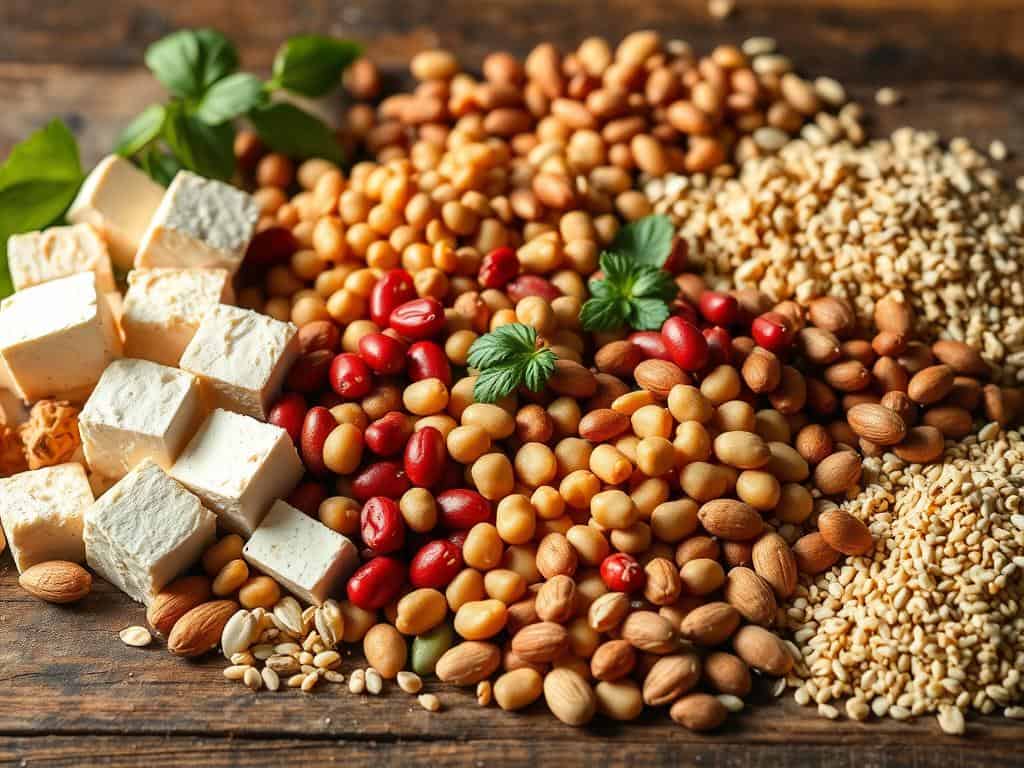
Did you know that nearly 57% of the world’s protein comes from plants? This fact is key for vegans. Many worry about getting enough protein without animal products. But a well-planned vegan diet provides all the protein you need.
Plant-based nutrition is now more popular for its health, ethical, and environmental benefits. There are many nutritious plant proteins available, from legumes to grains. In this article, I’ll share how to use these proteins to stay active and healthy. We’ll also bust some common myths about vegan protein sources.
Key Takeaways
- The majority of dietary protein supply globally comes from plant-based sources.
- Protein needs can be met through various vegan-friendly foods without animal products.
- Integrating legumes, grains, and seeds ensures a balanced protein intake.
- Understanding and utilizing diverse plant proteins is key to a strong and active vegan lifestyle.
- Myths about protein deficiency in vegans are often unfounded when diets are properly planned.
Understanding the Importance of Protein in a Vegan Diet
Protein is vital for our health and is one of the three key nutrients we need for energy. In a vegan diet, it’s super important to understand how to get enough protein. Our bodies use protein, coming from different plant-based sources, to build and fix tissues. There’s a common worry about getting enough protein on a plant-based diet.
The Role of Protein in Our Bodies
The amount of protein you need changes based on your age, sex, and how active you are. For instance, a young, active person needs about 0.8 grams of protein per kilogram of body weight every day. Studies show that you can get all the protein you need from a healthy, calorie-sufficient diet, no matter the protein source. This shows how a plant-based diet can provide all the protein we need and might even help prevent diseases like heart disease and diabetes.
Common Protein Myths for Vegans
There are many myths about vegan protein that cause confusion. One myth is that vegans must mix different foods to meet their protein needs. But research shows that plant proteins have all the essential amino acids we need. Actually, many vegans get more than enough protein without any animal products. By learning the truth about these myths, people can enjoy a healthy, well-planned vegan diet.
Best Plant-Based Proteins to Fuel Your Active Lifestyle
Finding the best plant-based proteins can change my diet a lot, especially for staying active. Including different sources of protein helps with muscle care and boosts overall health. Here, I’ll share my top picks for plant-based proteins that are both healthy and tasty.
Tofu and Tempeh: Soy Superstars
Tofu and tempeh are great sources of protein for anyone eating plant-based. Tofu has around 12 grams of protein per 100 grams, and tempeh has about 18.5 grams. You can marinate and grill them, or add them to soups. Plus, they’re full of vitamins and minerals for good health.
Lentils: A Nutritional Powerhouse
Lentils are also fantastic for protein, with 7.3 grams per 100 grams. They’re rich in fiber and nutrients, which help with digestion. Adding lentils to salads or soups keeps me full and gives me energy all day. They’re also a great meat substitute in many recipes.
Quinoa: The Complete Protein Grain
Quinoa is known as a complete protein grain. It has all the essential amino acids, with 3.6 grams of protein per serving. It’s perfect for muscle health and wellness. Quinoa is versatile, great in salads or as a side, and packed with nutrients.
Meat Alternatives: Satisfying and Nutritious
Lately, there are more meat alternatives available, making it easier to switch to plant-based eating. Items like seitan and bean burgers offer great taste and nutrition. These alternatives allow me to enjoy classic flavors while getting my plant-based protein. They help ensure I don’t miss out on enjoyable meals.
Conclusion
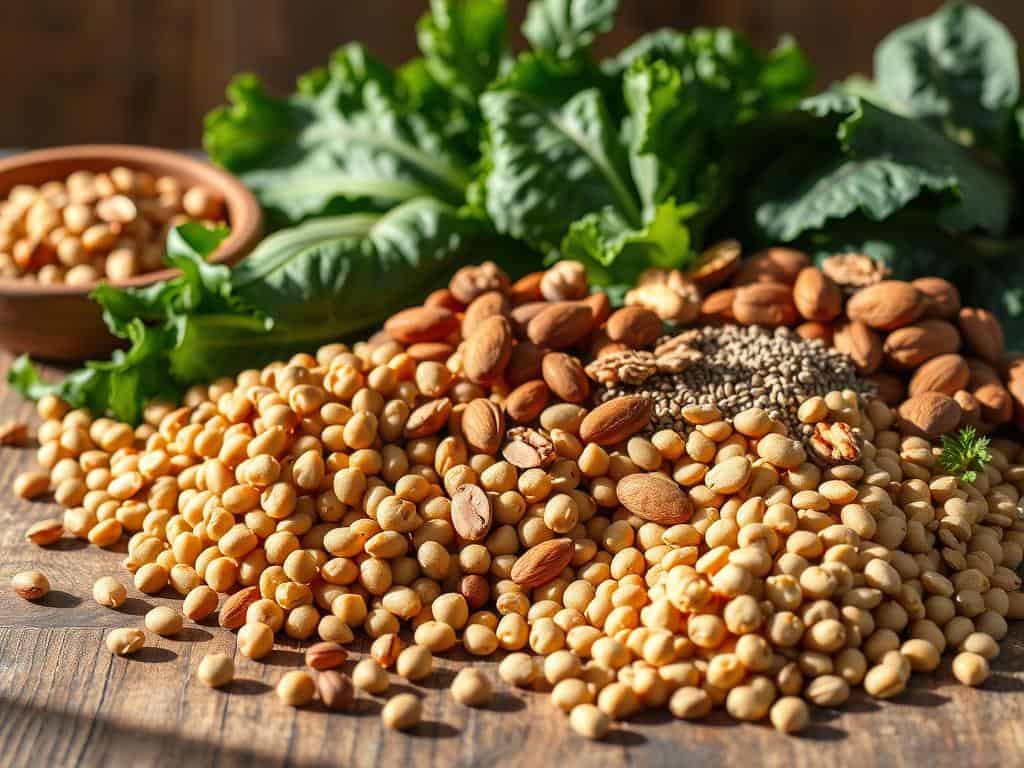
Choosing a vegan lifestyle is good for both health and getting important nutrients. Foods like tofu, lentils, and quinoa give me the essential amino acids I need. They help with muscle repair and growth and fit my goal to live sustainably.
Studies show that plant proteins are as good as animal proteins for fitness. Adding foods like chia seeds and nutritional yeast makes my meals better. They also help reduce risks of diseases like heart disease and high blood pressure.
By eating vegan, I support my health, ethics, and the environment. This choice breaks down myths about veganism and shows me diverse proteins. I can make healthy meals and know I’m helping my body and the Earth.
