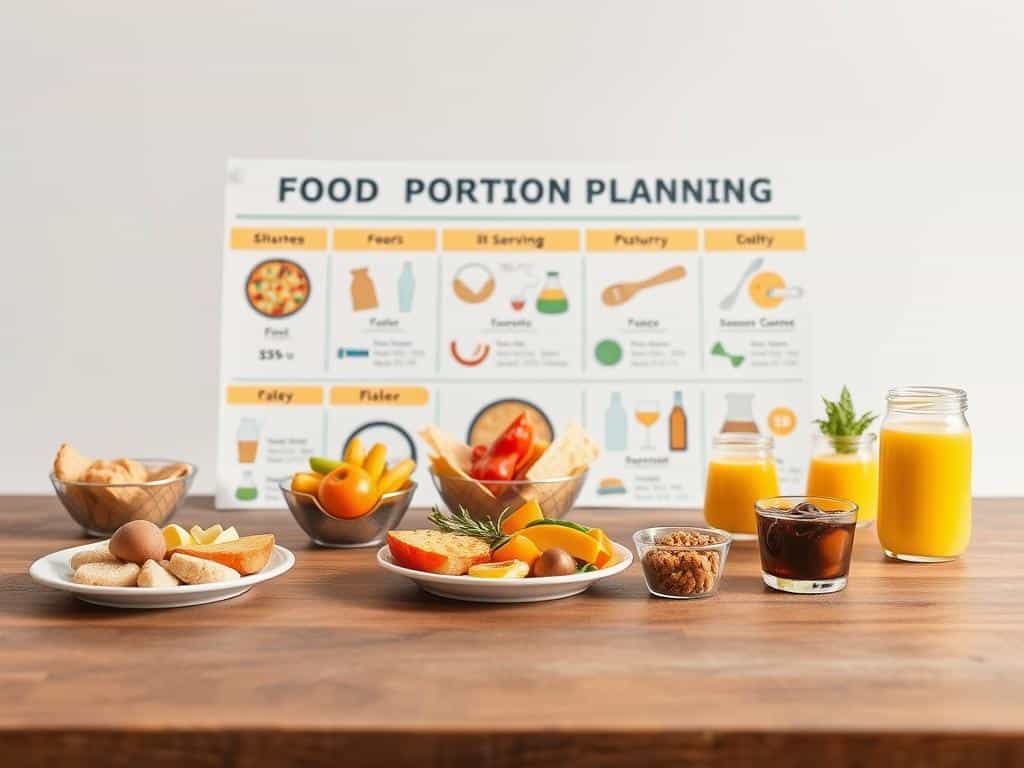
Did you know that each adult usually eats about one pound of food at events? Kids eat half a pound. This fact is key when planning food for gatherings. It doesn’t matter if it’s a wedding, birthday, or work event. Knowing how much food to serve is vital. It helps make sure guests are happy and keeps costs down.
This guide will teach us about food planning. We’ll learn how much of each type of food we need. Main dishes require 6 to 8 ounces of protein per person. Appetizers need 2 to 4 ounces. It’s important to get this right to avoid waste and ensure everyone enjoys the event. This advice will help tailor our food orders to our guests’ needs.
Key Takeaways
- Understanding serving sizes helps cater to guest satisfaction and budget control.
- Establishing portions based on guest count can prevent food waste.
- Different events may have unique food requirements affecting portion sizes.
- Using professional judgment is essential for adjusting portions based on preferences.
- A catering calculator can simplify estimations based on guest count and type of event.
Understanding the Importance of Food Portion Planning
Planning food portions well is key to a great catering experience. It ensures guests are happy and helps control costs. Carefully chosen portion sizes can also reduce food waste. In catering, serving the perfect amount of food is just as crucial as picking the right menu.
The Impact on Guest Satisfaction
Guests want to enjoy their meals fully. If portions are too small, they might leave feeling hungry and unhappy. On the other hand, too much food can cause discomfort and lead to waste. The right portion sizes make guests feel valued and create a welcoming environment. Knowing whether the meal is informal or formal helps in deciding the best portion size to make guests happy.
Cost-Effectiveness and Budget Management
Being cost-effective is important when planning food portions. Right serving sizes help manage budgets better. Events like cocktail parties may need smaller servings than grand dinners, making it easier to adjust expenses. Correctly estimating how much food is needed prevents overspending and ensures guests have a great time.
Reducing Food Waste
Cutting down on food waste is crucial for catering, supporting eco-friendly practices. Using smaller serving tools or clear signs can help guests choose the right amount of food, reducing leftovers. In today’s world, focusing on sustainable food use is more important than ever. Smart portion planning helps make events kinder to the environment.
Determining Appropriate Portions for Various Events
Figuring out the right food amounts for events is key to happy guests and a great time. It’s important to think about various things to make sure your food fits all kinds of meals and people. The event’s nature, timing, and who’s attending are crucial in planning portions right.
Factors Influencing Food Portions
The event type plays a big role in deciding food amounts. For example, formal dinners usually need more food than casual meet-ups. The time of an event matters too; morning events often require less food than meals served later. Also, how many people are coming affects how much food you’ll need. It’s also important to consider any dietary needs or allergies to include enough options for everyone.
General Guidelines for Different Meal Types
There are helpful tips for meal planning. At breakfast, you might serve two eggs or a three-egg omelet per person, with 1 cup of fruit. For lunch, consider a whole sandwich for each guest or 8 to 10 ounces of soup. Dinner usually calls for 4 to 6 ounces of meat or fish per person, with sides like salads and veggies. Don’t forget about snacks or appetizers, like 2 to 3 ounces of charcuterie, to keep guests happy.
Adjustments Based on Guest Demographics and Preferences
Your guests’ backgrounds and likes are big factors in portion sizes. Say your guests prefer healthy foods; you’ll want to serve nutritious options in the right sizes. Knowing how active they are, their usual appetite, and food preferences helps. This way, you can make sure to have enough food without wasting any, and truly meeting everyone’s needs.
Conclusion
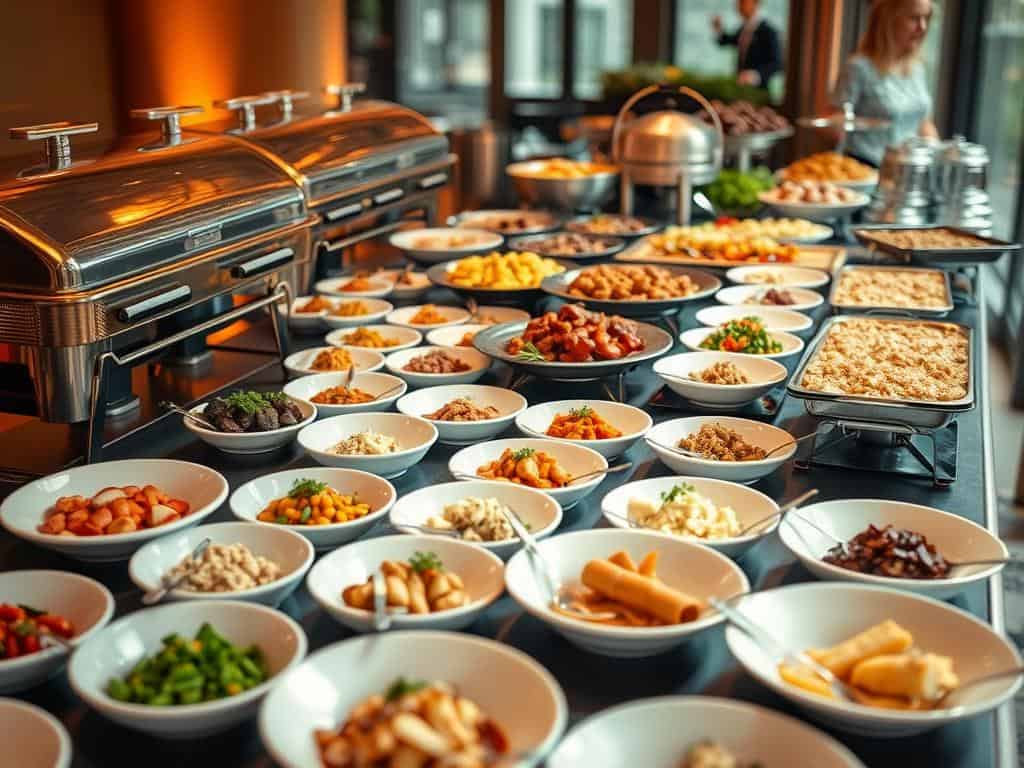
Planning food portions well is key to doing well in catering. When I get portion sizes right, everyone at the event is happier. It not only meets but goes beyond what guests expect. By finding the right amount of food, I make sure there’s no waste. This also helps stick to the budget.
This guide is a great tool for planners. It helps decide how much food is needed for different meals and types of guests. Using these tips, I can make eating at events better and more eco-friendly.
Smart food planning makes guests happy and makes gatherings a hit. It shows how important it is to think carefully about every aspect of catering. By mixing the right quality with the right amount of food, I make events to remember. I also use what we have wisely.
