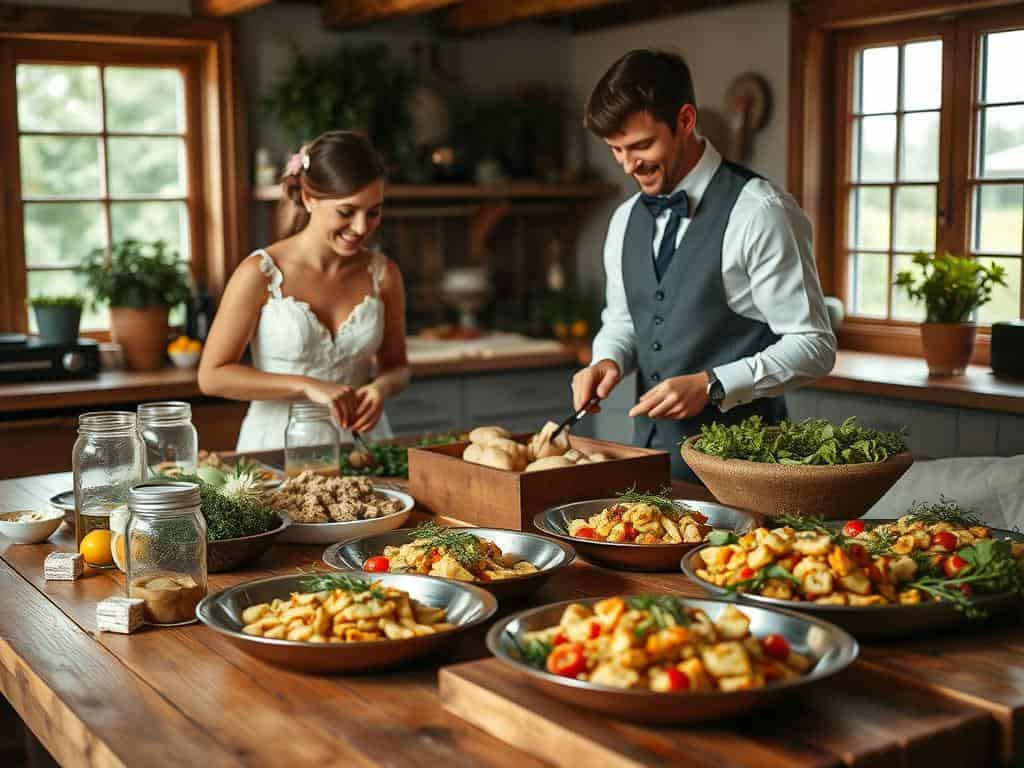
Did you know nearly half of a wedding’s budget is often for food and the venue? For a $10,000 wedding, this means about $5,000 goes towards just catering and venue costs. With more couples choosing smaller celebrations, DIY wedding catering has become popular. This approach allows for big savings and the chance to serve meals that show off personal taste. Yet, diving into DIY catering to save money comes with its own set of challenges. Many don’t realize the hard work and coordination needed to make DIY catering work for such an important event.
As this trend gains momentum, I invite you to learn more about what DIY catering involves. Let’s look at its pros and cons to see if it fits your wedding plans.
Key Takeaways
- Setting aside 50% of your budget for food means you can save a lot with DIY options.
- Making your meals adds a special, personal touch to your menu.
- Good planning is key; without it, costs could rise unexpectedly.
- Food stations offer a fun and easier option for self-catered weddings.
- Getting help from family can lessen the load and make the experience better.
- Knowing what your venue allows for catering is essential to avoid surprises.
Understanding DIY Wedding Catering
Considering DIY wedding catering is key to envisioning your big day. Self-catering is not just cooking. It involves planning menus, buying ingredients, making the food, transporting it, setting up, serving, and cleaning. Some couples also bake their own wedding cake, adding to the work. But, the joy comes from adding personal touches and saving money.
What Does DIY Wedding Catering Involve?
DIY wedding food prep is a step-by-step process. You plan the menu and service style, test recipes, and make a shopping list. Doing some food prep days before your wedding can reduce stress. Having friends and family help not only eases the workload but also creates precious memories.
The Rise of DIY in Modern Weddings
The popularity of small, intimate weddings has boosted DIY catering. These small gatherings are perfect for showing off your cooking skills and making the day special. Since traditional catering can be very costly, many couples go the DIY route to save money. This trend towards personalization and saving is attracting more couples to DIY their wedding food.
The Pros and Cons of DIY Wedding Catering
Planning a wedding comes with excitement and challenges, like choosing your catering. DIY wedding catering is attractive for its cost-saving potential. Couples can cut costs by up to 30% by handling the catering themselves. Using family recipes not only saves money but also makes the day more special and connects with guests.
Cost-Cutting Benefits of Self-Catering
DIY wedding catering mainly helps save money. It lets couples choose what they want to eat, fitting both taste and budget. Buying food in bulk cuts costs even more. With a simple menu, you stay organized and save money, making everything more rewarding. Around 65% of event planners say DIY catering makes the food feel more personal and keeps costs low.
Challenges and Risks of DIY Catering
But, DIY catering has its downsides. It becomes harder with bigger weddings. About 40% of those who cater themselves say it’s overwhelming, especially with over 50 guests. Bad planning can lead to high costs, safety issues, and poor food quality. Moreover, 60% worry about the hassle of setting up and cleaning afterwards. This makes you wonder if the savings are worth the stress.
DIY Wedding Catering: Planning and Execution
Planning a DIY wedding catering needs careful thought. Start with choosing simple dishes you can manage well. This keeps things tasty and doable for the team. It’s best to skip complex recipes to save time and reduce stress.
Menu Selection and Preparation Tips
Picking a menu, I suggest salads, proteins, and simple sides. Easy to make dishes are key when your team is helping out. Cocktails or buffet styles cut down on costs and work. Keeping dishes simple makes cooking smoother and keeps the team working well together.
Organizing Your Cooking Team
To organize a cooking team, assign tasks clearly. Making things fun and matching tasks to skills is crucial. Set up a timeline to keep things moving smoothly and avoid last-minute issues.
Logistics: Transportation and Storage of Food
Getting the food right involves planning for transport, storage, and serving. Safe food handling is super important to avoid making guests sick. Proper equipment for cooking and keeping food at the right temperature is essential, especially with COVID-19. Good logistics ensure a smooth and memorable wedding day.
Conclusion
I think DIY catering is a smart, cost-effective way to plan a wedding. It lets me save money and adds a personal touch to my big day. But, it’s important to balance my hopes with what I can realistically do. Getting the food ready, working well with others, and making sure everything runs smoothly on the wedding day are key.
With good planning, handling the food for many guests can be manageable. Using budget-friendly ingredients and smart strategies, like simple appetizers or secondhand supplies, helps control costs. I realize that while making our own food is fun, it’s also a fine line between managing it all and enjoying the party.
Good prep and teamwork can make the meal memorable and special. It’s crucial for couples thinking about self-catering to be ready for the work ahead. This way, our DIY approach can turn into a beautiful, worry-free celebration.
