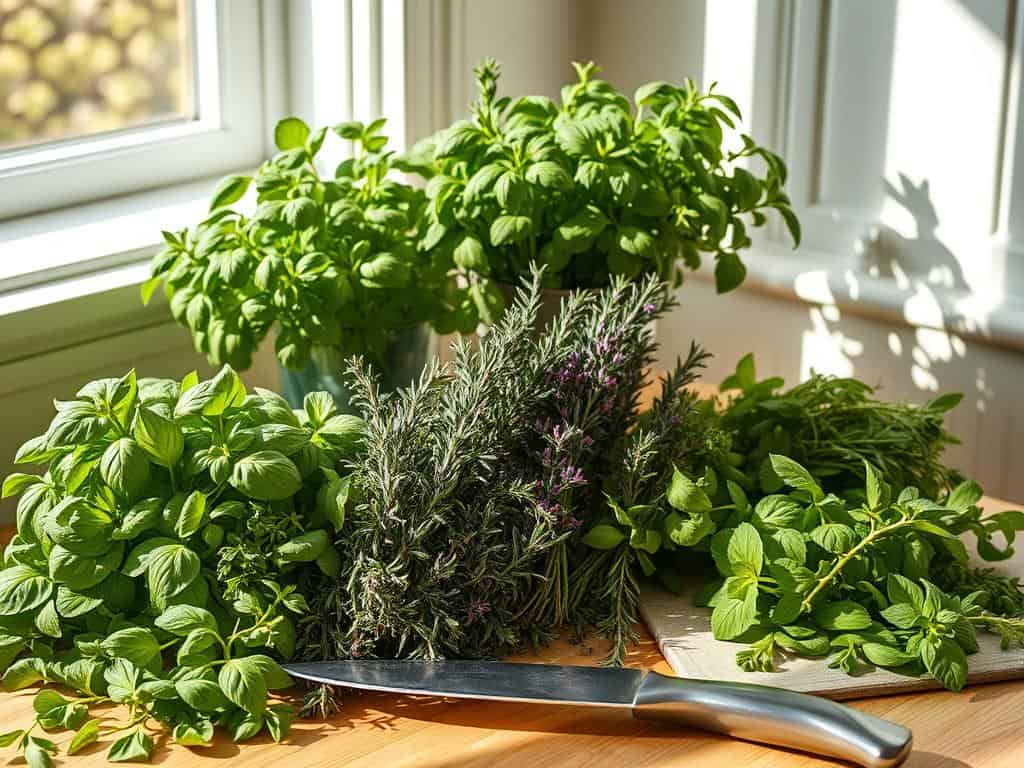
Did you know that fresh herbs can make your food taste better? They add unique flavors and are good for you. But many cooks don’t use all the herbs they could, missing out on a lot of taste. I love adding fresh herbs from my garden or store to my dishes. Knowing how to pick and keep your herbs fresh can change your cooking game. Let me show you some kitchen tricks about herbs and how to keep them tasting great.

Key Takeaways
- Fresh herbs enhance the flavor of dishes significantly.
- Understanding the types of herbs—hardy and tender—is crucial for effective use.
- Storing herbs properly can prevent spoilage and maximize their shelf life.
- Fresh herbs should be added toward the end of cooking to retain flavor and aroma.
- Basil is particularly perishable and should be consumed shortly after purchase.
- Creative incorporation of herbs can elevate flavors in various cuisines.
- Utilizing fresh herbs as garnishes can improve presentation and taste.
Understanding Types of Fresh Herbs
Fresh herbs are crucial in cooking, separated into hardy and tender kinds. Knowing them helps use their tastes fully. It’s key to understand their traits, how to use them, and look after them.
Hardy Herbs
Hardy herbs like rosemary, thyme, and mint have strong stems. They can cook for a long time without losing flavor. These herbs are great for adding depth to dishes. They last longer than tender herbs too.
They need dry storage to keep their flavor. Storing them right means they can spice up meals longer.
Tender Herbs
Tender herbs include parsley, cilantro, and tarragon. They’re best added just before a dish is finished. This keeps their taste fresh and strong. These herbs should be used quickly to enjoy their full flavor.
To store them, put in water or wrap and refrigerate. This keeps them fresh for about a week.
Basil and Its Unique Care
Basil needs special attention compared to other herbs. It likes warm places and hates the cold. Cold makes its leaves turn black.
Keep it on the counter to stay fresh and green. Good basil care means tastier food.
How to Use Fresh Herbs to Elevate Flavor
Adding fresh herbs to cooking makes simple meals much better. These ingredients boost flavor and offer health perks. Packed with nutrients and aromas, fresh herbs are key for anyone who loves to cook. Knowing how to use them well can make your food taste amazing.
Incorporating Fresh Herbs into Cooking
Start by using hardy herbs like rosemary and thyme early in the cooking process. Their strong tastes come out best during long cook times, making soups and sauces taste great. Soft herbs, like parsley and cilantro, go in just before you serve. This keeps their smell and look. For example, adding fresh dill to omelets before serving really makes the dish stand out.
Creative Recipes to Try
Looking for new ways to use herbs is fun. I love making mint water for a quick, fresh drink. Another go-to is roasted potatoes with rosemary. They fit with any meal and show off the herbs. Trying out new mixes can lead to great discoveries. It lets the herbs’ flavors really come through.
Best Practices for Flavor Enhancement
Cutting herbs finely with a sharp knife is very important. A dull knife damages the herbs, making them lose some of their taste and color. For example, basil should be thrown in at the last moment to keep its distinctive flavor. To keep herbs fresh longer, store them wrapped in a damp paper towel inside a ziplock bag. Paying attention to how and when you use herbs will help you get the most out of them.
Proper Storage Techniques for Fresh Herbs
Storing fresh herbs right is key to making them last longer and taste great. Different herbs need different care to stay fresh. Knowing how to store fresh herbs cuts down waste and makes sure I always have tasty herbs ready to use.
Methods for Storing Hardy Herbs
For hardy herbs like rosemary and thyme, wrap them in a damp paper towel and put them in a zipper-lock bag. This keeps them moist but not too wet, which stops rot. Storing them this way can keep them fresh for about three weeks, much better than just one week without care.
It’s also important to keep them away from too much light. Too much light can make them lose color and go bad faster.
Storing Tender Herbs Effectively
Tender herbs like parsley and cilantro need a different touch. I wash them first, then keep their stems in water in a sealed container. This can keep them fresh for upto three weeks. Keeping them cool and out of direct sunlight helps them last longer.
Also, changing the water every couple of days keeps them crisp and fresh.
Special Care for Basil
Basil needs special care because it doesn’t like the cold. It should stay out of the fridge to avoid bruised, black leaves. I keep basil in a glass of water at room temperature. This keeps it good for about two weeks, perfect for adding to meals. Taking good care of basil keeps it tasty and fresh for longer.
Conclusion
Using fresh herbs really steps up the game in both flavor and nutrition in my dishes. In this guide, I explained how to sort various herbs, use them in different recipes, and store them to keep their freshness. Knowing how each herb tastes helps me to add that special touch, whether it’s for marinating chicken or boosting a plain side dish.
I’ve discovered that tough herbs like rosemary and thyme should go in early when cooking. On the other hand, softer herbs like basil and cilantro are best added at the end. This approach lets every herb shine without taking over the dish. Also, to keep my herbs fresh longer, I found that changing their water every couple of days helps a lot.
By trying out various recipes and grasping how to use fresh herbs, my cooking has really improved. Dishes such as Garlic Herb Couscous and marinated chicken show how crucial fresh herbs are for adding that extra flavor. I encourage you to dive into the rich, flavorful world of herbs and see the difference they make in your cooking.
