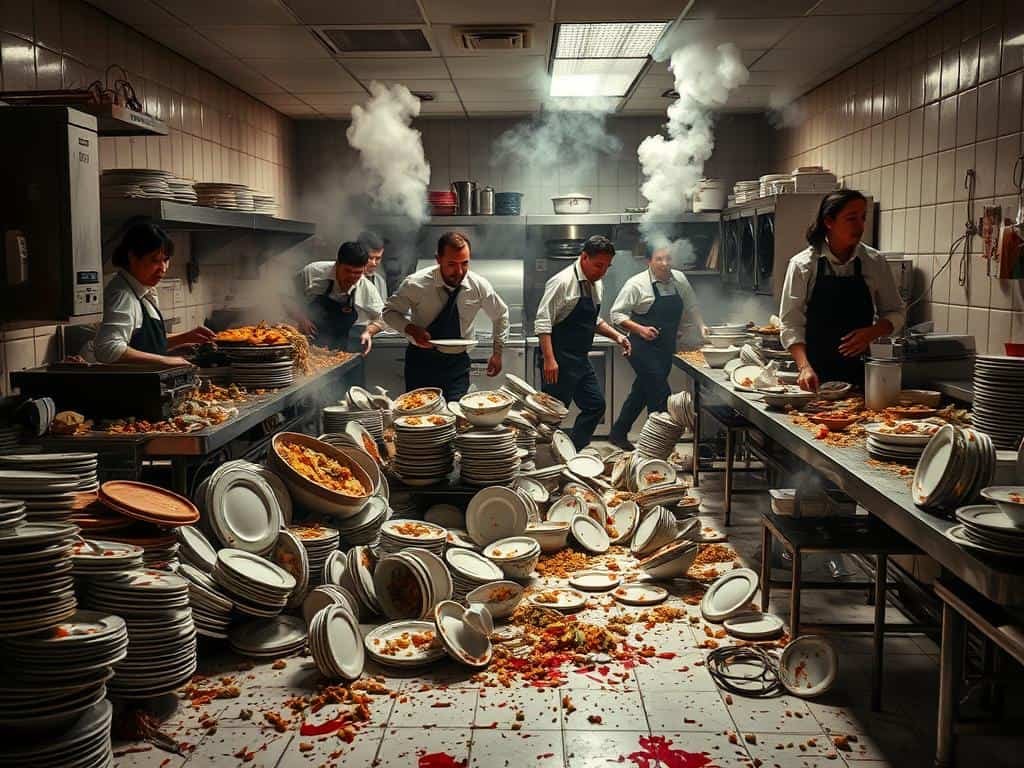
Did you know that during a historical wedding feast in 1891, 66.67% of the guests got sick from the food? Sadly, 5 of those guests passed away, which was 8.33% of the ones affected. This shows how vital food quality and safety are, a lesson that’s still important today. I’ve heard many stories of event disasters. They range from food poisoning at a pool party to ruined wedding cakes. These stories show how a perfect event can turn into a mess when catering fails.
In this article, I’m going to share five true stories of catering nightmares. They highlight why it’s crucial to plan carefully and take precautions. By learning from these mistakes, we can avoid them in our own events. This way, we make sure everyone has a great time.
Key Takeaways
- Food quality and safety are non-negotiable in catering.
- A significant number of guests can suffer from food-related illnesses.
- Proper staffing and meal options are essential for guest satisfaction.
- Avoid unrealistic expectations about food quality and service.
- Planning and execution are vital to prevent catering fails.
- Learning from past catering disasters can help improve future events.
Catering Disaster Stories: Learning from the Past
Catering disasters remind us why food quality and safety are crucial. These events, from serious illnesses to unhappy guests, have long-term effects. Learning from these mistakes is key to avoiding them in the future.
The Importance of Food Quality and Safety
About 30% of catering problems are linked to food safety, like spoilage or sickness. An example is a wedding that led to a lot of people getting seriously sick. This shows how vital good food quality is.
Caterers must focus on health and safety to protect their guests. It’s important for everyone’s well-being.
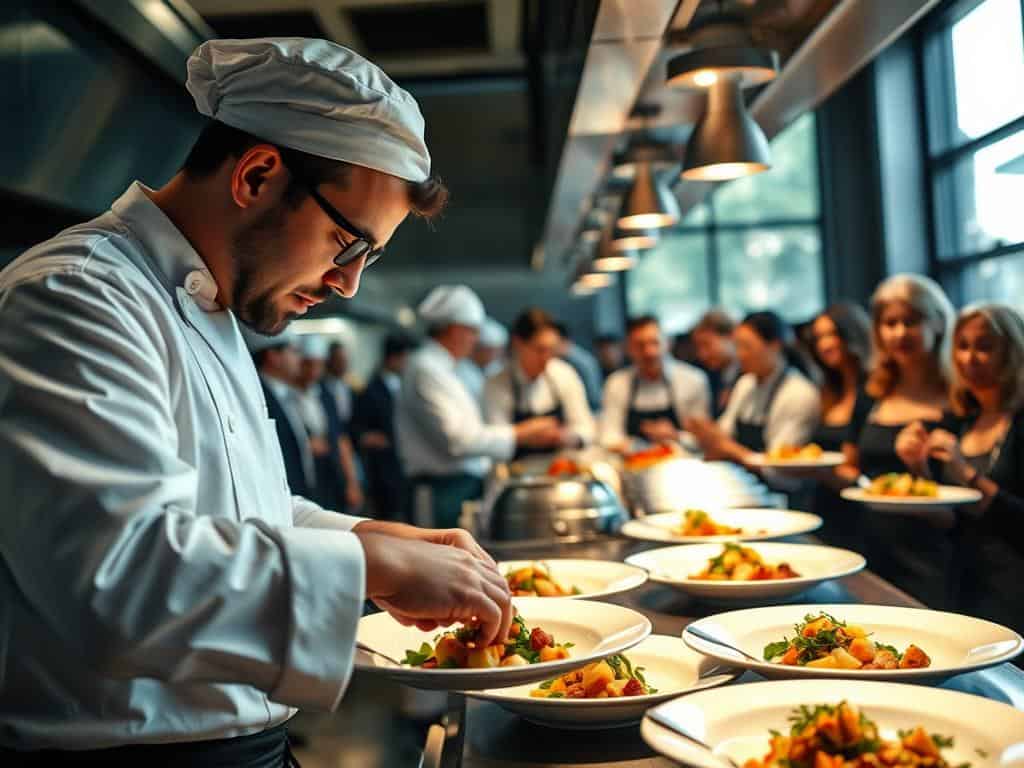
Guest Experiences Gone Wrong
Many people have had their big days ruined by bad catering choices. There’s a funny but sad story from Turkey. A wedding meal was ruined by poorly made vegetarian food. Guests were disappointed.
This shows how low food quality can ruin even the happiest occasions. It can lead to lasting unhappiness. Data says 40% of clients might not rehire a caterer after a big problem. Keeping guests happy should always be a top priority.
Common Causes of Catering Nightmares
Catering failures often start from a mix of issues that grow into large problems. Miscommunication leads to unrealistic expectations. Plus, staff issues can mess up even the best-planned events.
Miscommunication and Unrealistic Expectations
Miscommunication is a big reason for catering mistakes. For example, an event had 20 guests get the wrong meal because of a miscount. This often happens from not knowing what the client wants clearly. Clear plans can lower the chance of disappointment.
I’ve seen how wrong guesses about guest diets caused many complaints. This shows the importance of talking about likes, allergies, and the number of guests.
Equipment and Staff Shortages
In my event planning work, I’ve seen many staffing problems. One caterer was nearly two hours late and short-staffed. This made everyone stressed.
Not having enough trained people can affect the food’s quality and increase pressure. Equipment issues, like missing dishes, force others to step in. And not having spare burners can ruin food temperature, which hurts quality.
Importance of Proper Contracts
Clear catering contracts help avoid problems. These contracts should detail everything, like how many guests and the service level expected. Ambiguity can lead to confusion, especially with many guests.
At a large wedding, confusion over food amounts made the caterer run out of options. Strong contracts make things run smoother and make the event better.
Conclusion
Looking back at these stories, we learn key tips for event planning. Success comes from great food preparation, clear communication, and strong contracts. Addressing issues early helps improve customer happiness. This turns events into memorable moments, not nightmares.
Learning from past mistakes is vital for caterers. The growth of Asian American food spots highlights the need for realness and food culture knowledge. This helps caterers connect better with people. It ensures everyone enjoys their meal.
The main aim is to make every event guest happy. By focusing on outstanding catering and customer happiness, we overcome obstacles. This leads to successful events that people remember fondly.
