Did you know nearly 54 million people in the US suffer from weak bones or osteoporosis? It’s crucial to learn how to keep bones healthy. Keeping bones strong is key for staying healthy, not just looking good. A diet with plenty of calcium and vitamin D is important for bone density. This helps avoid issues like osteoporosis. By eating the right foods and staying active, I can keep my bones strong and feel better overall.
Key Takeaways
- Adults need at least 700mg of calcium daily for optimal bone health.
- Vitamin D helps in the absorption of calcium; adults require 10 micrograms (400 IU) per day.
- Postmenopausal women and older adults are at significant risk for accelerated bone loss.
- Dairy products and fortified foods are excellent sources of calcium for non-vegans; vegans should seek alternative options.
- Weight-bearing exercises are essential for maintaining strong bones and preventing osteoporosis.
Understanding Bone Health and Its Importance
Bone health is key to how we feel and move every day. It affects not just our strength but also how easily we move and our life quality. Keeping bones healthy is vital as we get older. This is because poor bone health can lead to many problems.
The Role of Calcium in Bone Health
Calcium is important for strong bones. We need about 700mg daily. We can get this from dairy, green veggies, and foods with added calcium. If we don’t get enough calcium, our body takes it from our bones. This can make them weak and more likely to break.
How Vitamin D Supports Calcium Absorption
Vitamin D helps our body use calcium well. Adults need about 10 micrograms (400 IU) each day. We get vitamin D from the sun and foods like fatty fish. Not having enough vitamin D makes it hard for our body to use calcium. This shows why both are needed for strong bones.
Consequences of Poor Bone Health: Osteoporosis and Beyond
If we ignore our bone health, we could face serious issues like osteoporosis. This affects about 54 million Americans. It leads to very fragile bones. The risk is especially high for people over 50 and women after menopause. Knowing about the risks of not having enough calcium and vitamin D is crucial. It helps us avoid the severe impact of osteoporosis.
Top Foods for Strengthening Bones
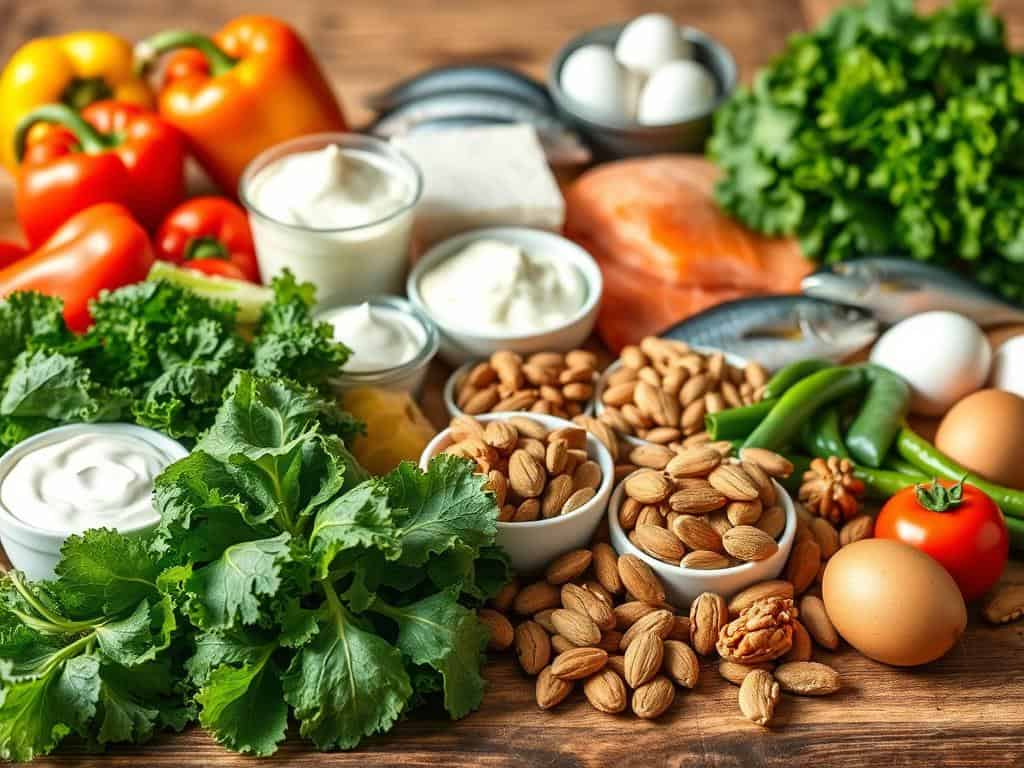
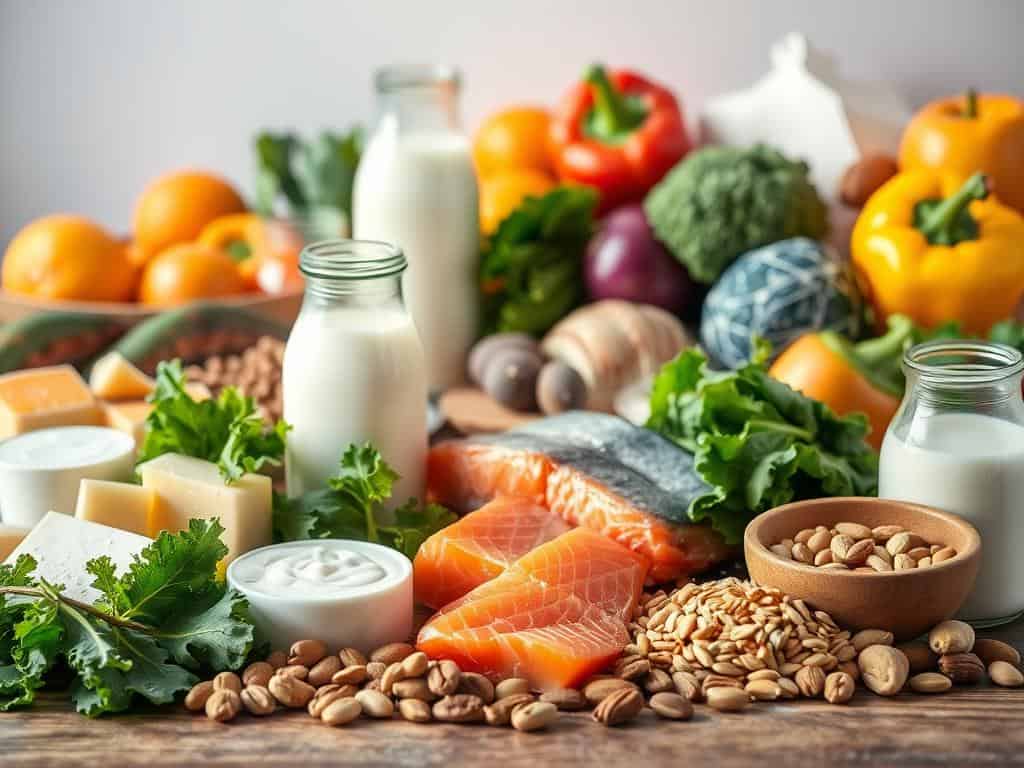
To keep bones strong, it’s crucial to eat the right foods. I make sure to include a variety of foods to aid bone health. Some top picks are foods high in calcium and those with vitamin D.
Dairy Products: A Rich Source of Calcium
Dairy items like milk, cheese, and yogurt are great for calcium. Eating yogurt can give you around 300 mg of calcium. This helps in keeping bones strong at every age.
Green Leafy Vegetables: Lesser-Known Calcium Sources
Besides dairy, green veggies such as kale and collard greens are also rich in calcium. They give you 100-250 mg of calcium per serving and have vitamin K. Adding these to your meals boosts your nutrients.
Fatty Fish: Beneficial for Vitamin D Intake
Fatty fish like salmon and mackerel are key for getting vitamin D. They aid in calcium absorption and keep bone structure strong. Eating them weekly helps maintain good bone health.
Other Essential Foods: Nuts, Fortified Products, and More
Nuts and seeds are good for adding healthy fats and protein to your diet. They help with calcium absorption. I also use fortified products and eat fruits like figs to get more nutrients for strong bones.
How to Strengthen Bones Through Diet and Lifestyle
Keeping bones strong is vital at any age. This means eating right and staying active. Adding weight-bearing exercises and enough protein to your diet helps a lot. Together, they make a strong plan for keeping your bones tough.
Incorporating Weight-Bearing Exercises
Weight-bearing exercises are key for making new bone. Walking, jogging, and lifting weights fight gravity to keep bones dense. Aim for 30 minutes a day to keep bones healthy and stay fit. This also fights bone loss that starts in our 30s.
The Importance of Adequate Protein in Your Diet
Protein is half of what bones are made of. Eating more protein can mean fewer breaks and denser bones. For older folks, getting enough protein is super important. I try for 86 grams a day to keep my bones from losing mass and to help absorb calcium better.
Role of Other Nutrients: Magnesium and Zinc
Magnesium and zinc are also crucial for bone health. Magnesium helps use vitamin D, which is important for calcium absorption. Foods like nuts and leafy greens are great for this. Zinc helps bones grow and stay dense, and you can find it in meat and legumes. Paying attention to these can boost the good effects of calcium and vitamin D.
Conclusion
Bone health is very important for my overall well-being, and it’s something I need to focus on. By eating the right foods for strong bones, I can make my bones stronger. Adding calcium and vitamin D to my diet is key to keeping my bones healthy as I get older.
But, getting strong bones isn’t just about what I eat. Doing weight-bearing exercises for 30 minutes, four days a week helps too. I also need to think about getting other nutrients like magnesium and zinc. These are all important for keeping my bones strong.
Starting good bone health habits when I’m young is important. I want to set good examples now and encourage others as well. Making the right food choices for strong bones is a big part of staying healthy and energetic as I age.
